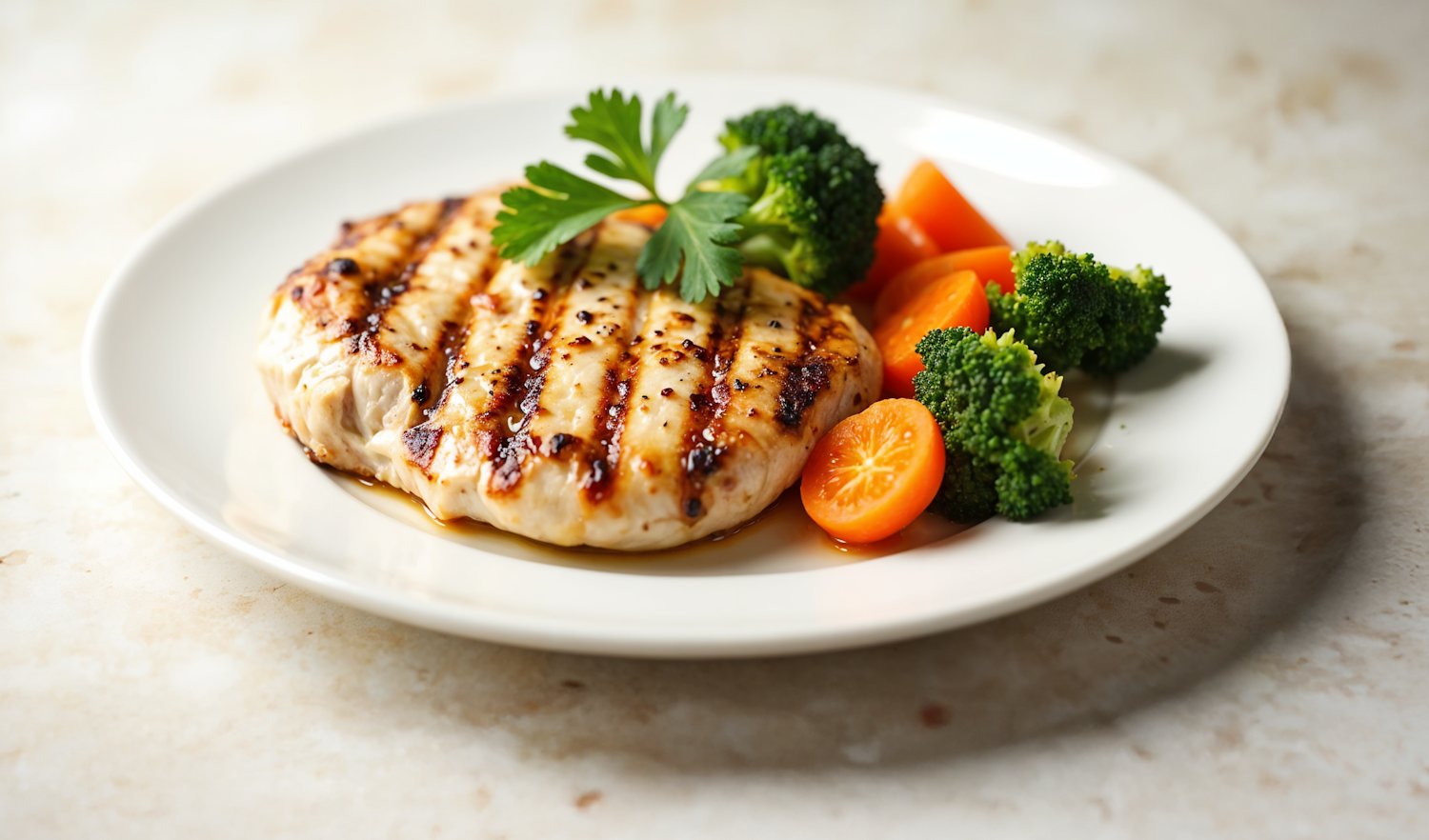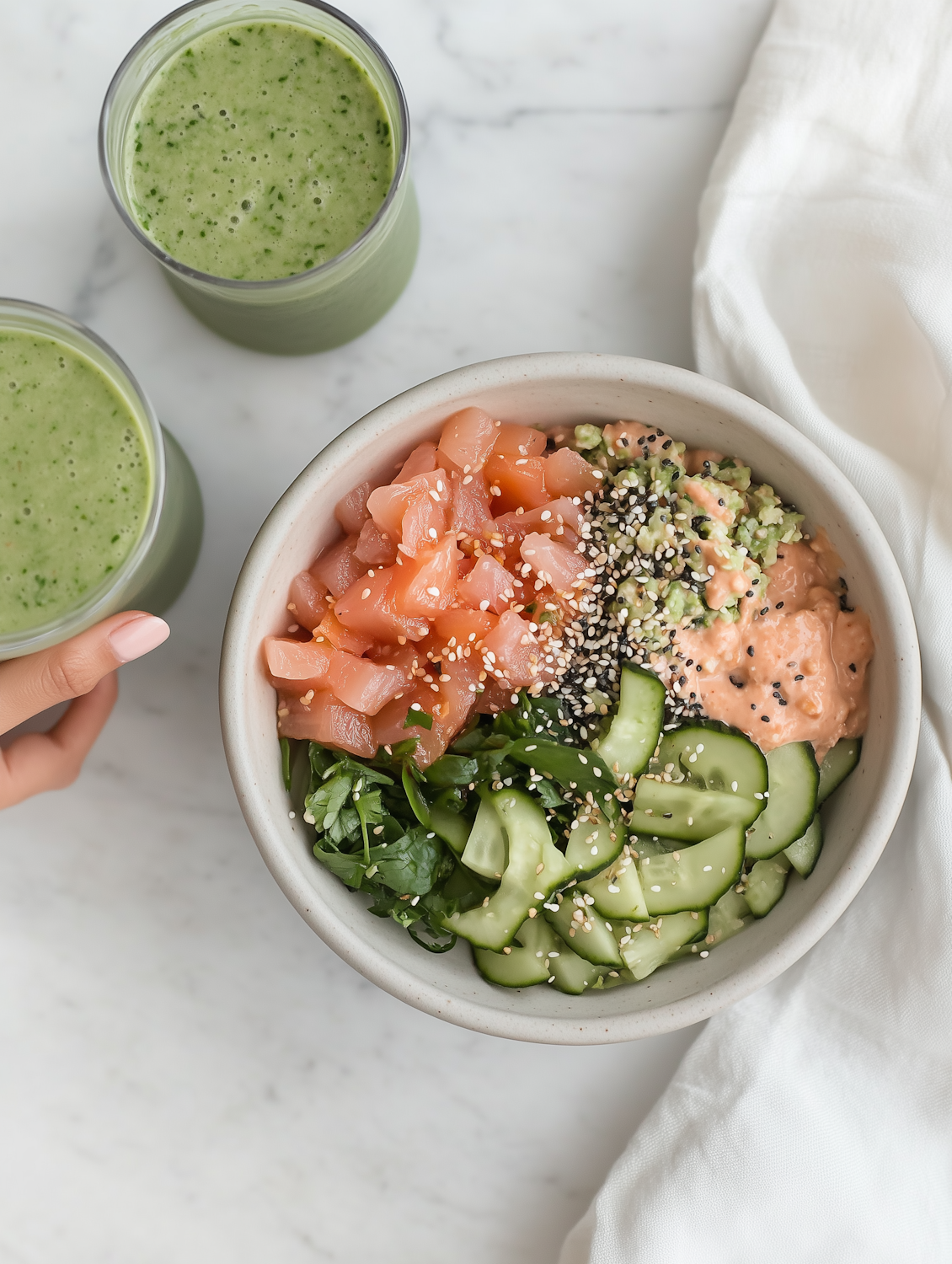
To work out your own number, multiply your weight in kilograms by 1.2 and by 1.6. That range is the daily goal in the current US guidelines. The meal plan builder does the sum for you and shows how much to aim for at each meal.
How much protein do adults need a day?
The Dietary Guidelines for Americans 2025–2030 set a goal of "1.2–1.6 grams of protein per kilogram of body weight per day". The guidelines also suggest including protein at every meal.
| Body weight | Protein a day at 1.2–1.6 g/kg |
|---|---|
| 55 kg (121 lb) | 66–88 g |
| 70 kg (154 lb) | 84–112 g |
| 85 kg (187 lb) | 102–136 g |
| 100 kg (220 lb) | 120–160 g |
These figures are a guide for healthy adults, not an exact requirement. If you carry a lot of extra weight, a figure based on your full body weight may run high, and a registered dietitian can tailor it.
Do you need more protein if you exercise?
Somewhat. The International Society of Sports Nutrition position stand on protein and exercise says a daily intake of 1.4 to 2.0 g per kilogram "is sufficient for most exercising individuals". That overlaps with the general guideline, so most people who train a few times a week need only aim for the upper half of the everyday range.
To pair your eating with a training week, the workout plan builder sets up the exercise side.
How much protein should you eat at each meal?
The same position stand gives a per-meal guide of "an absolute dose of 20–40 g", and says these doses "should ideally be evenly distributed, every 3–4 h, across the day." In practice, that means a solid source of protein at breakfast, lunch and dinner rather than most of it in one evening meal.
The simplest way to do that is to fill a quarter of every plate with protein, as described in the anti-inflammatory plate.
What are good sources of protein?
MedlinePlus, from the US National Library of Medicine, lists both animal and plant sources:
| Animal sources | Plant sources |
|---|---|
| Lean meat and poultry | Beans, lentils and other legumes |
| Fish and seafood | Tofu, tempeh and other soy foods |
| Eggs | Nuts, seeds and nut butters |
| Milk and other dairy | Some grains, such as quinoa and wheat germ |
MedlinePlus is clear that "You do not need to eat animal products to get all the protein you need in your diet." It also notes that the essential building blocks of protein "do not need to be eaten at every meal. The balance over the whole day is more important." For a plant-based week, see vegetarian and vegan meal planning.
Who should check with a doctor before eating more protein?
- People with kidney disease, whose protein needs can be quite different. Follow your doctor's or dietitian's advice.
- People with other long-term conditions or on a diet a doctor has set.
- Anyone pregnant or breastfeeding, whose needs change.
For the rest of the picture, how many calories you need and how to plan a week of healthy meals show how protein fits into the whole day. The full guide to nutrition covers the rest.